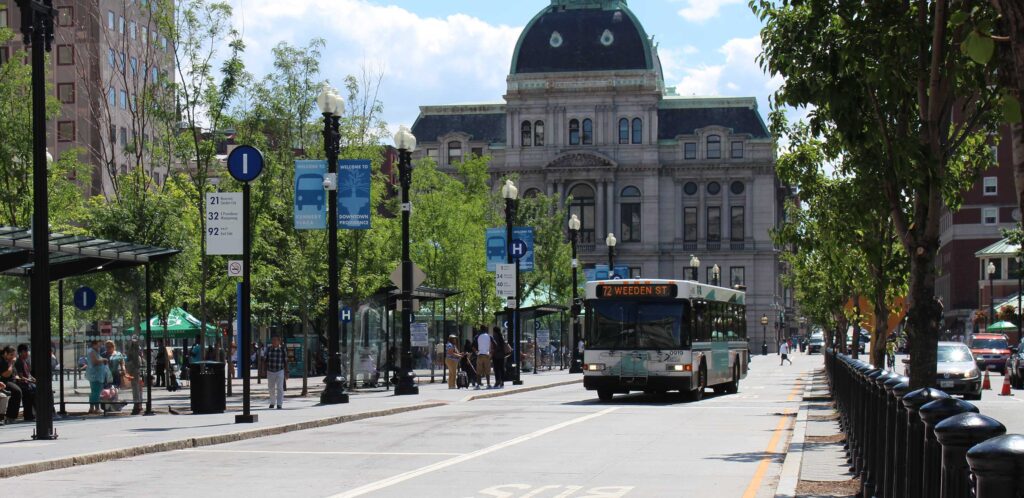
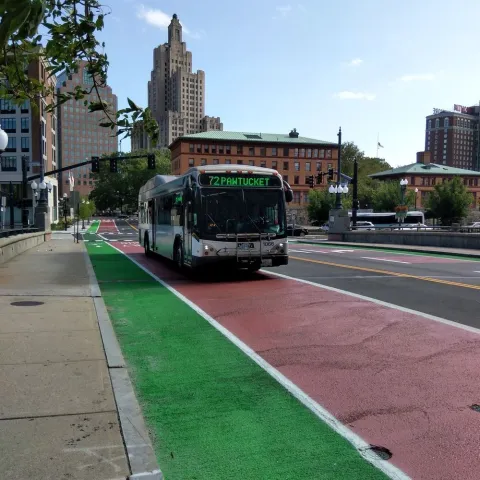
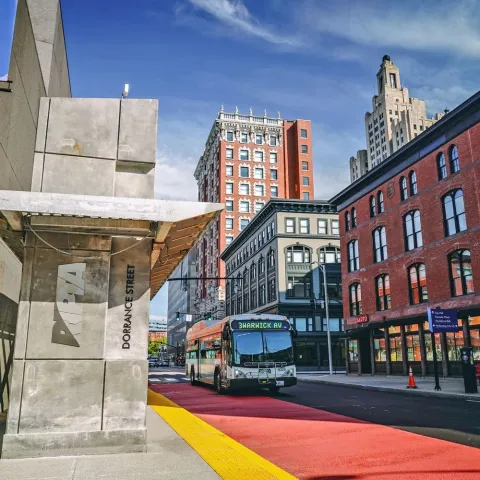
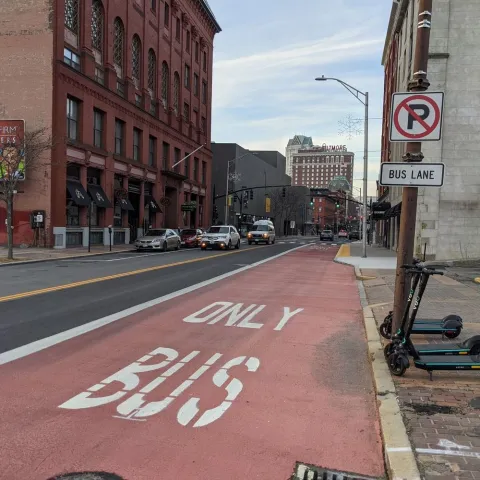
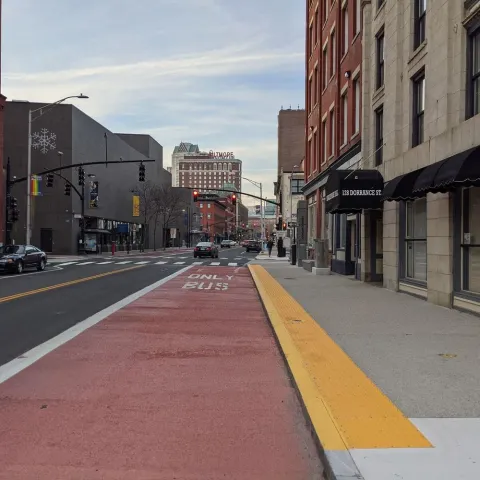
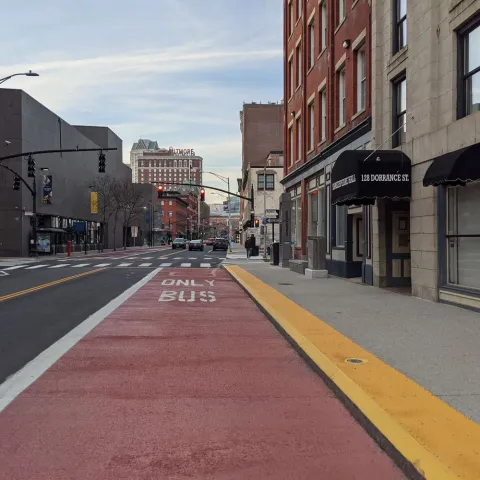
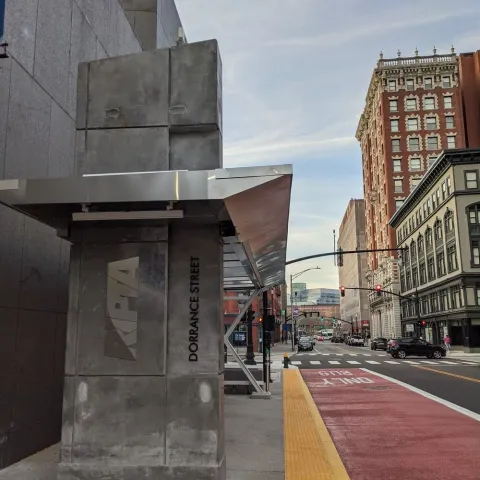
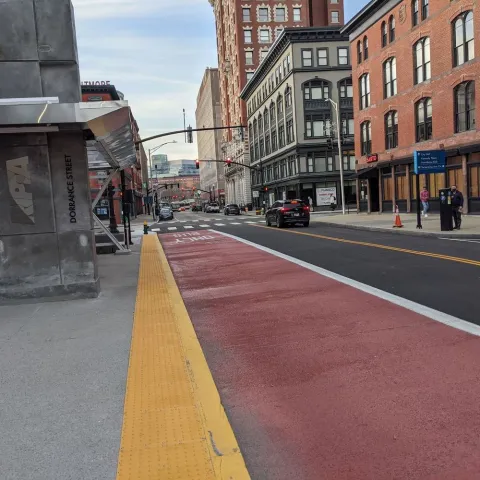
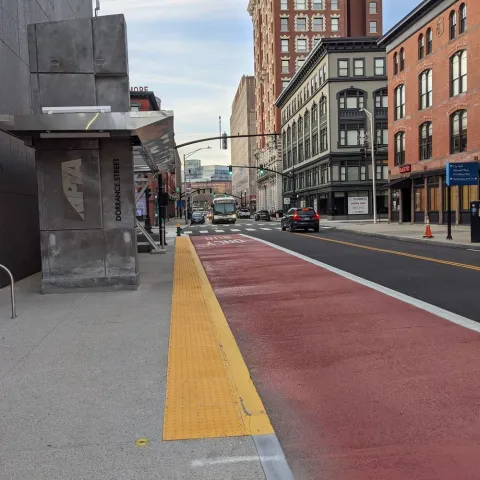
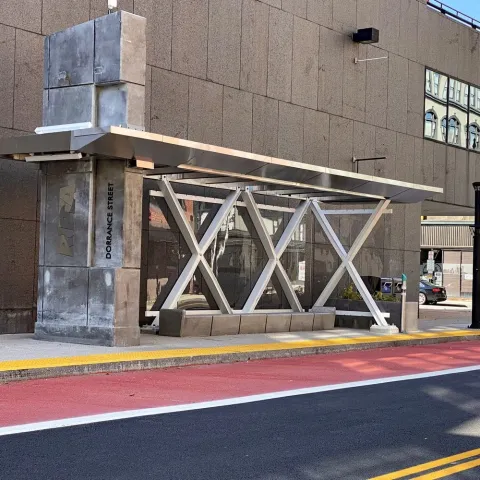
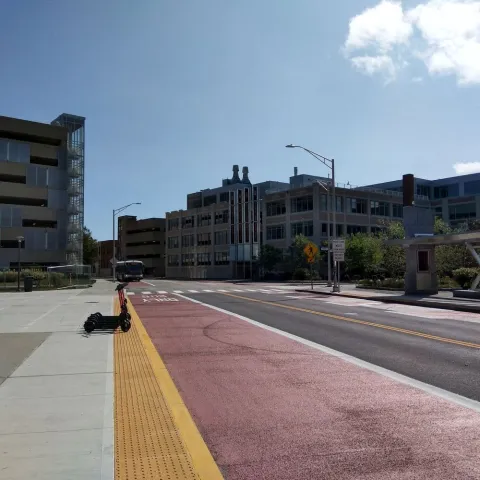
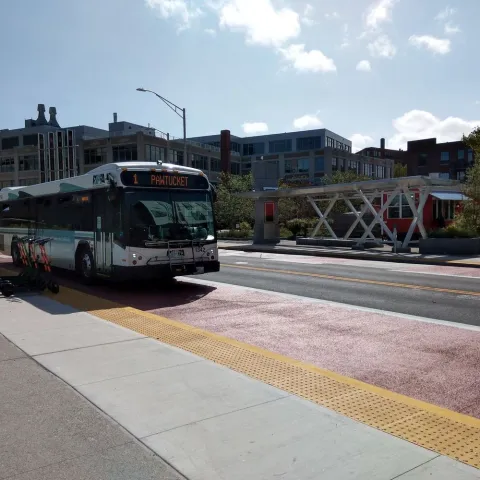
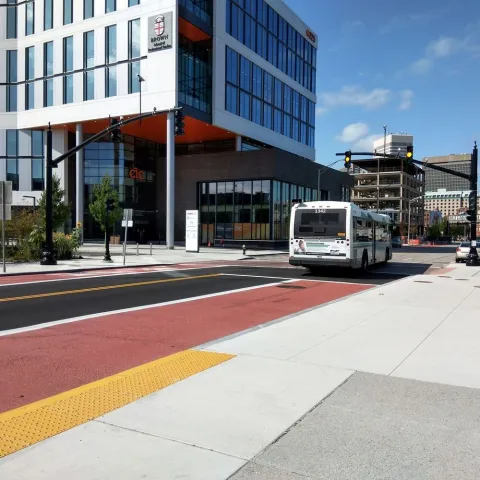
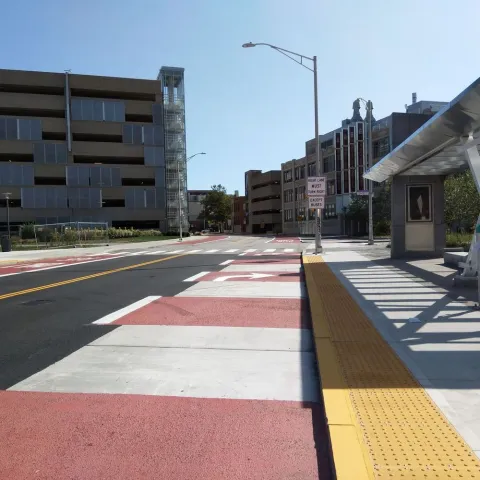
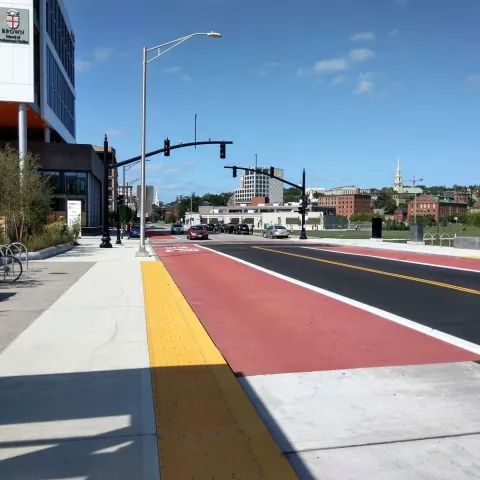
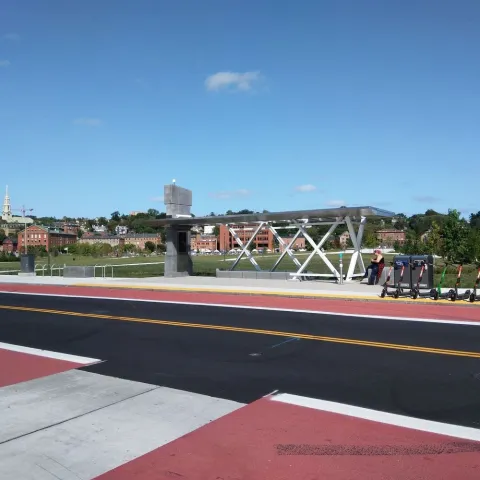
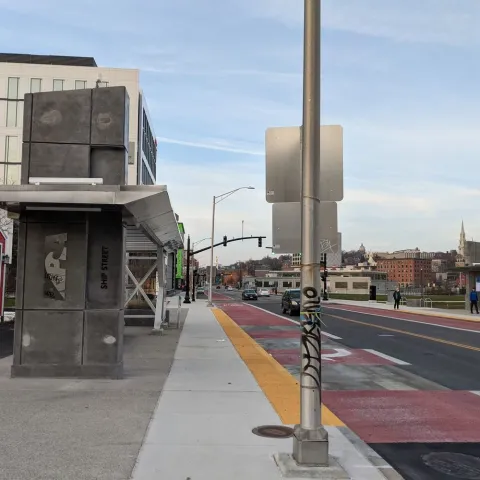
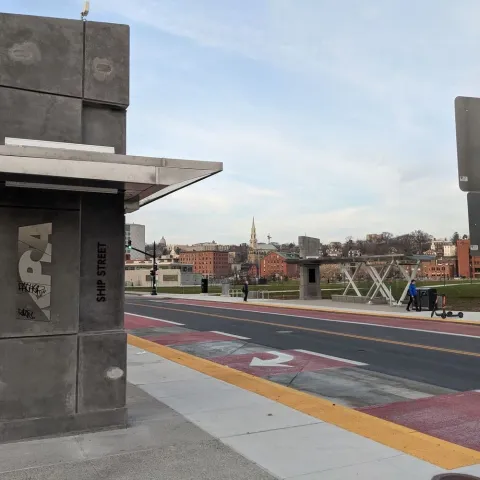
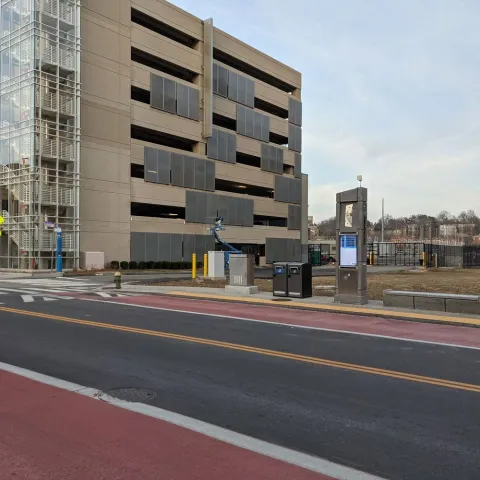
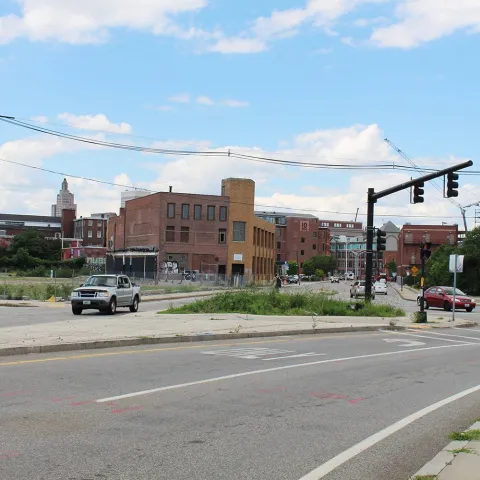
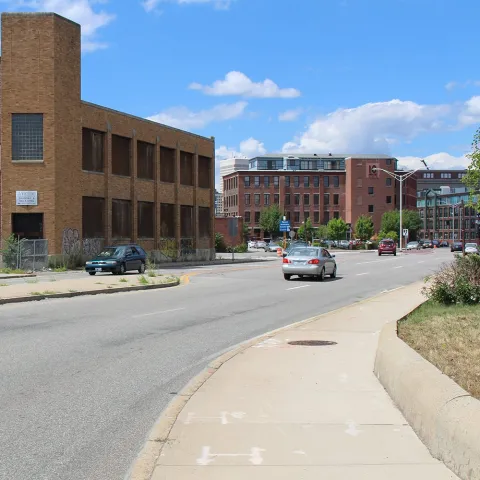
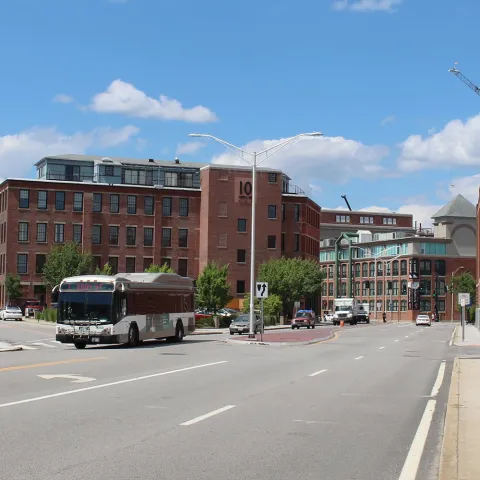
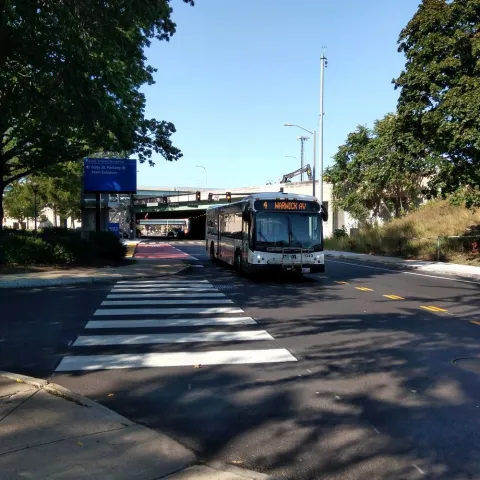
RIPTA Routes 3, 4, 51, 54, 58, and 72 operate along the corridor. Routes 1 and 92 also serve some DTC stops.
Why don’t more RIPTA routes travel along the DTC corridor? +
We believe a 5-minute frequency is appropriate to meet passenger demand in the downtown DTC corridor. Some routes (i.e. RIPTA Routes 1 and 92) serve certain DTC stops, but not the entire corridor. Additional routes could travel via the corridor in the future.
Where are dedicated bus lanes located? +
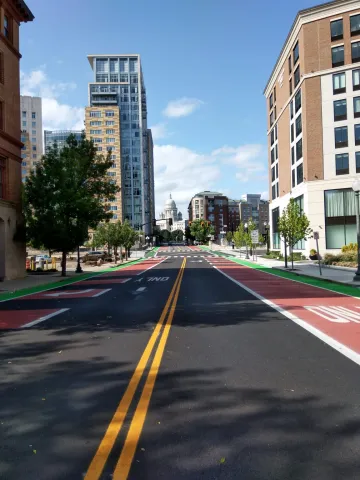
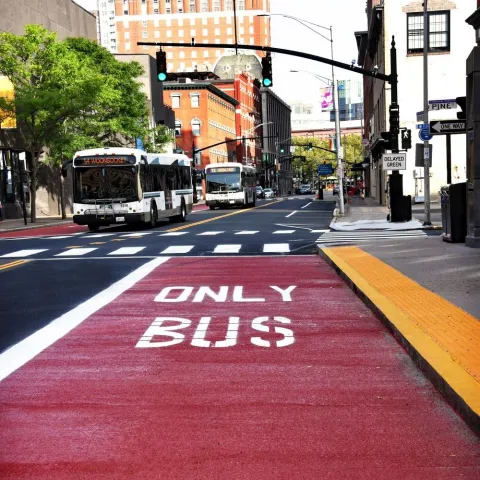
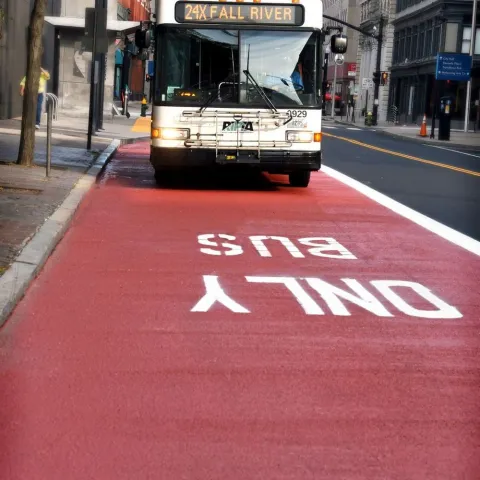
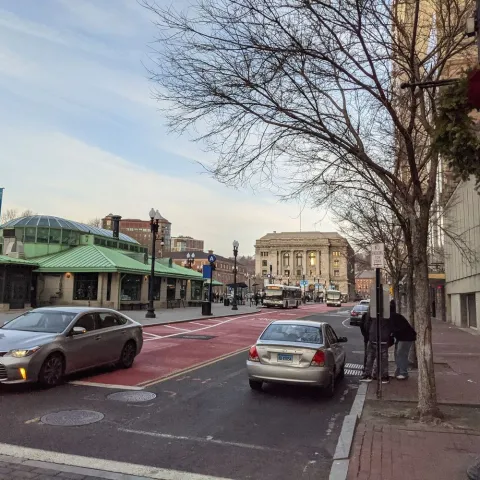
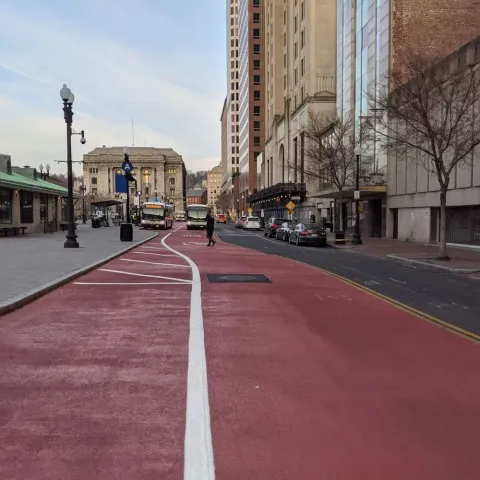
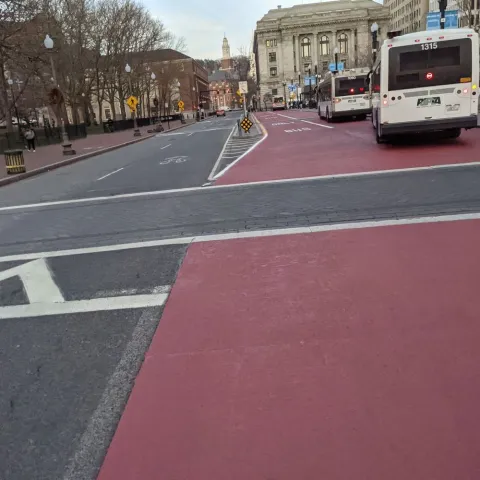
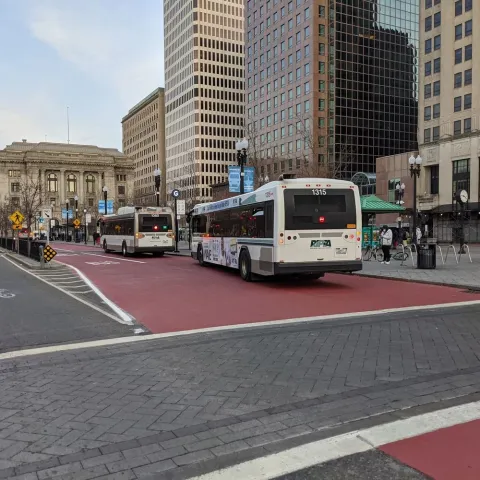
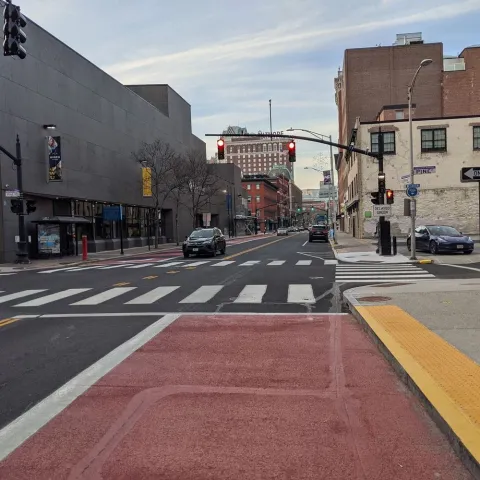
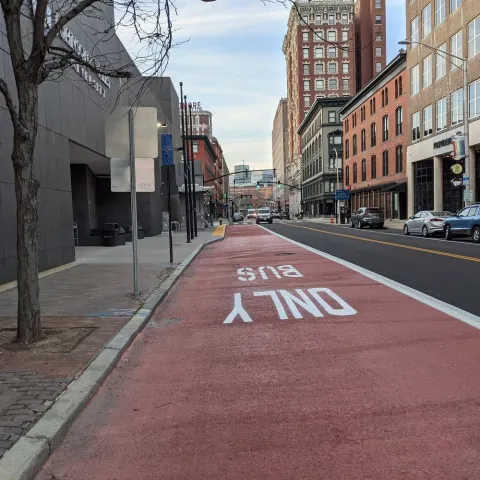
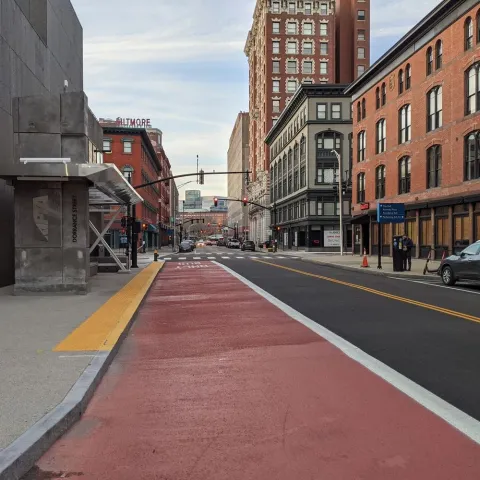
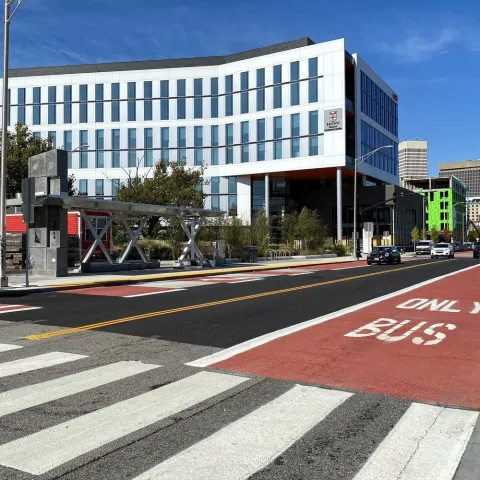
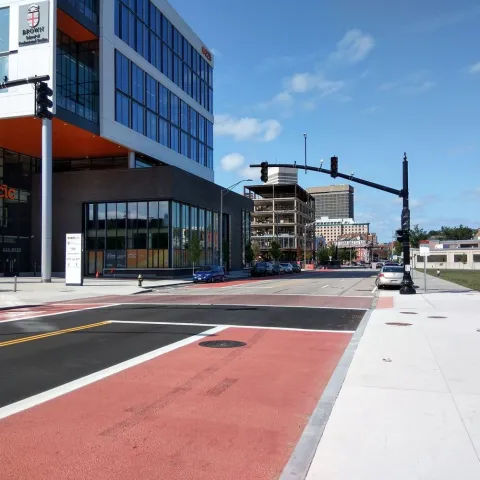
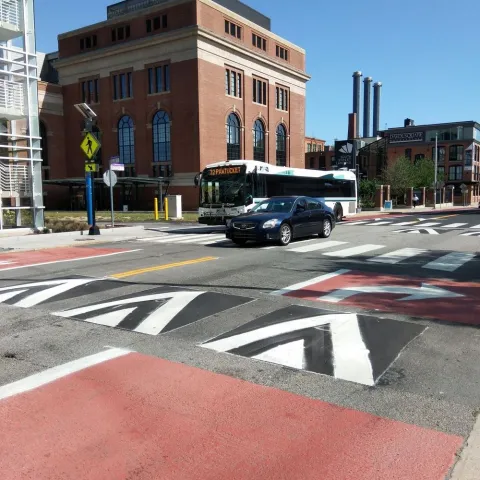
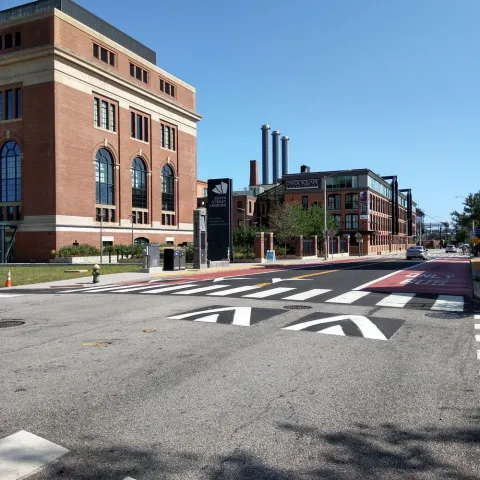
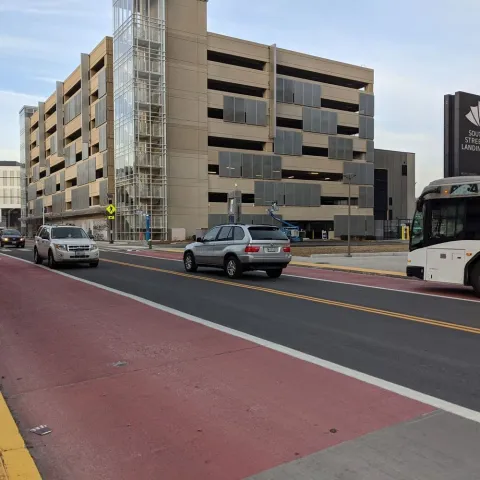
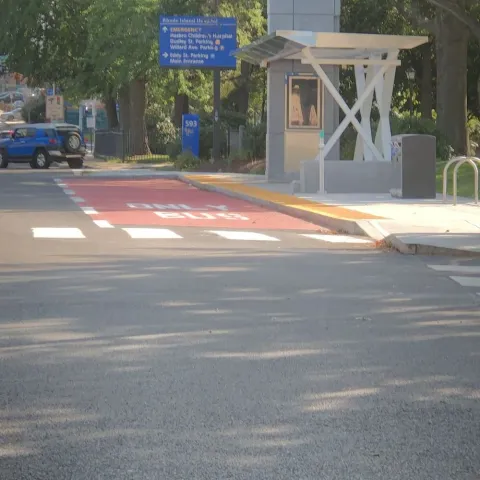
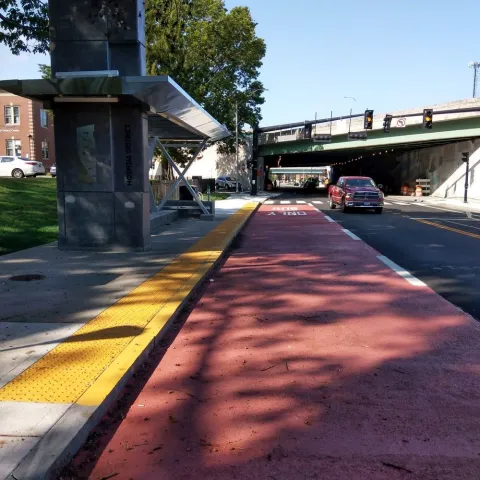
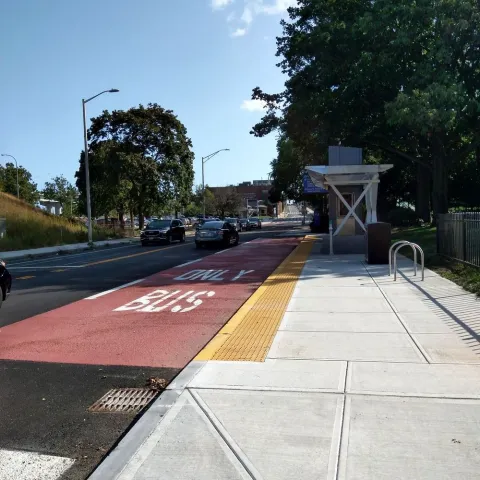
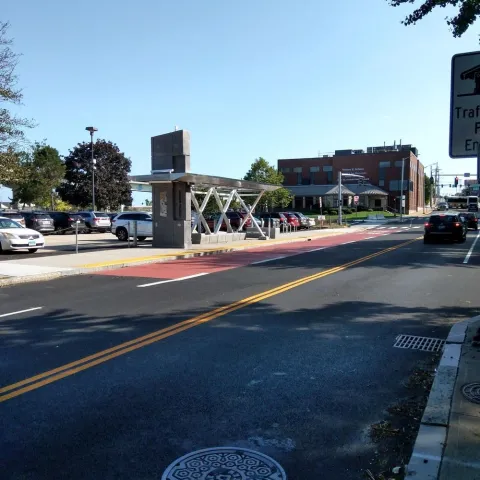
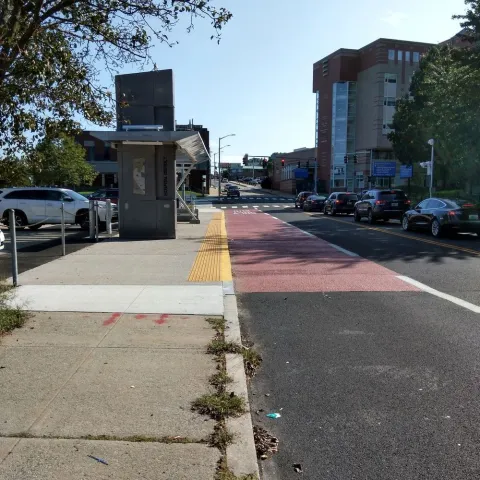
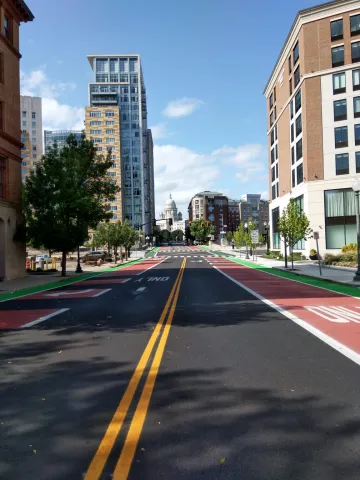
Dedicated bus lanes are located: along Eddy Street (north of RI Hospital) and near South Street Landing; on Dyer Street (in the southbound direction near the new Wexford development); and along Exchange Street (between Kennedy Plaza and Providence Station). Bus lanes are also located at all DTC stop locations, including the full northbound block of Dorrance Street between Friendship and Pine and the southbound block between Weybosset and Pine.
What types of vehicles are used? +
RIPTA is using buses from our regular bus fleet. However, as we continue to transition to electric buses it is likely that some of these buses will operate along the DTC.
Can other vehicles use the bus lanes? +
Emergency vehicles are able to use DTC bus lanes, as well as any vehicle making the next available right-turn.
How are “no parking” and “no driving” rules in the bus lanes enforced? +
RIPTA and the City of Providence are working together to establish rules for the bus lanes. New legislation or ordinances may be required. We also believe it will be important to conduct a campaign to educate downtown drivers about any restrictions.
Will any dedicated bicycle lanes be added? +
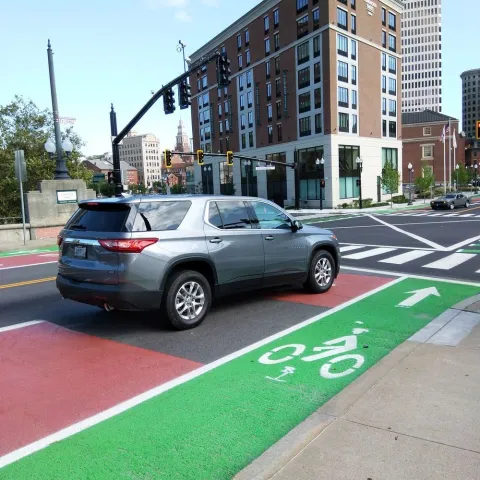
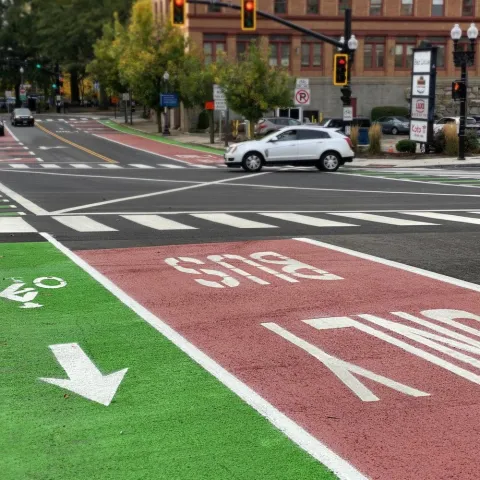
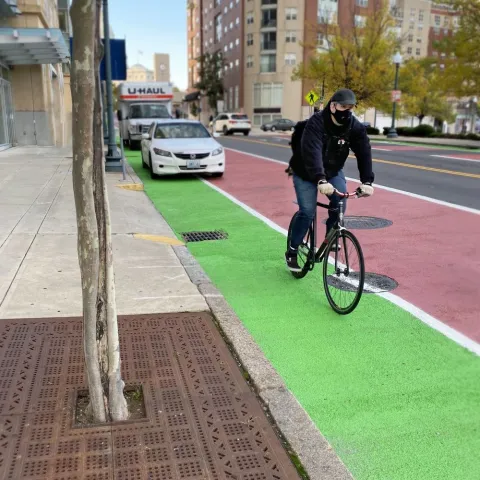
Bicycle lanes were installed on Exchange St. leading to Providence Station, and possibly on certain segments in the Jewelry District. For safety reasons, bicycles are not allowed in the dedicated bus lanes.
What is Transit Signal Priority (TSP) and how does it work along the DTC? +
Transit Signal Priority (TSP) adjusts the timing of a traffic signal’s red and green cycles to reduce the amount of time a transit vehicle spends waiting at a red light. Extending green lights for buses along the R-Line reduced the overall travel time by 10%. We believe it will reduce future bus travel times along the shorter DTC corridor between RI Hospital and Providence Station by about 20%. TSP will also make travel times along the DTC more reliable, which will help create a service more people can depend on.
What type of information is displayed at DTC stops? +
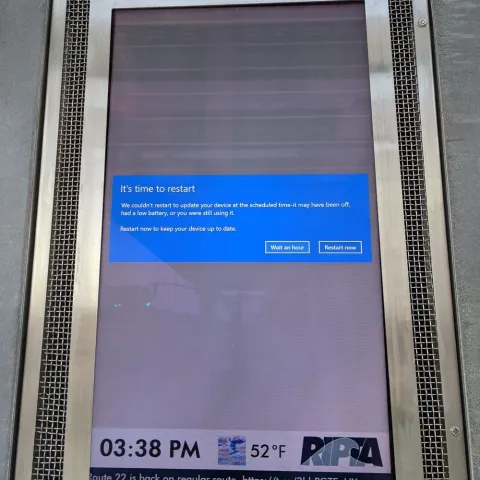
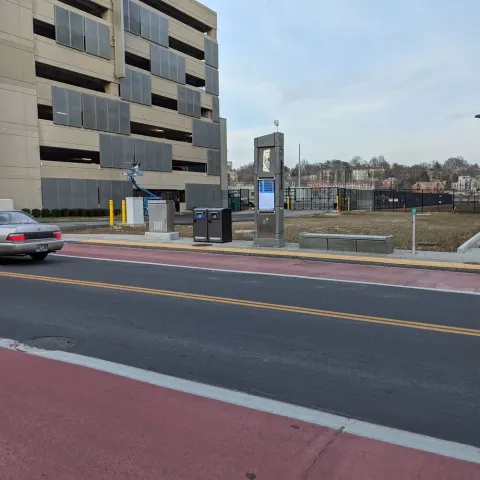
Real-time information displays show bus schedules as well as changes and disruptions to service. These smart displays also offer additional information about area attractions and events. If you have any suggestions for information you would like to see or that will make your trip easier, please let us know.
How was the DTC project funded? +
There was $17 million available to design and construct the project, including a $13 million federal grant for the project and $4 million from RIPTA and the State of Rhode Island.
How are stops and shelters along the route maintained? +
RIPTA cleans and maintains bus shelters using in-house maintenance staff or private contractors. Unfortunately, with about 3,500 bus stops in our statewide system, we are not able to remove snow at all locations. However, we may try to find local partners to adopt DTC stops for light cleaning and snow removal.
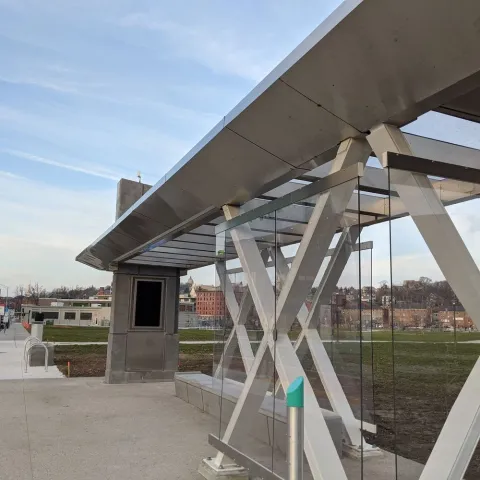
We carefully considered maintenance needs as part of our design process and have constructed shelters and other amenities to be as resistant as possible to damage and vandalism. Instead of glass panels, we used a polycarbonate material and RIPTA has an inventory of replacement panels on hand in case of damage.
A third public information session was held to share final design plans for the DTC corridor prior to the start of construction in mid-2018. View Presentation or View Presentation Boards.
Flyover of the DTC Corridor
Watch this flyover of the DTC corridor which highlights DTC station locations (in light blue), dedicated bus lanes (in red) and bike lanes (in green). These plans are based on preliminary design and may be updated as we move towards construction.
Public Meeting Held 05.09.17
A second public information session was held in May 2017 to present design concepts for the DTC that will now advance into engineering. Six station locations were identified, along with dedicated bus lanes in certain segments. This meeting was jointly held with the City of Providence and included discussion of potential long term concepts for continuing to transform Kennedy Plaza as an active civic space while accommodating RIPTA buses. VIEW PRESENTATION
Public Meeting Held 12.06.16
We held our first public information session in December 2016 to introduce the project to local residents and other stakeholders and to get input on the type of passenger amenities desired along the corridor. VIEW PRESENTATION
TransitCenter
TransitCenter, a foundation supporting transit leadership across the US visited Providence in February 2018 and highlighted the benefits of the anticipated DTC corridor on its national blog. Click here to read the post.
March 2018 Public Meeting
RIPTA held a public meeting on March 5th to give RIPTA riders, downtown residents and local business owners an opportunity to learn more about the DTC.
Final Design is Underway
We are working to finalize final design plans and to prepare for the start of DTC construction in the spring of 2018.
Jarrett Walker Tours DTC Route
Jarrett Walker, an internationally renowned transit planning consultant toured the DTC route in March 2017, then reported on his blog “…it solves two urgent downtown problems at once. It provides the attractive and legible very-frequent spine that makes so many American urbanists want streetcars, but it also solves the problem of getting major bus line through downtown, so that the whole city benefits. It’s an excellent project with relevance to many US downtowns. I encourage you to follow its progress.”
Conceptual Design is Underway
Project engineers are working to lay out design concepts for stations and other amenities in the corridor. Please check back soon, as proposed concepts will be posted to the website as they are developed.
DTC Construction
Construction activity began in August 2018 and will be complete in 2020. Station infrastructure in Kennedy Plaza and at Providence Station will be added at later dates, as part of future projects planned in these areas.
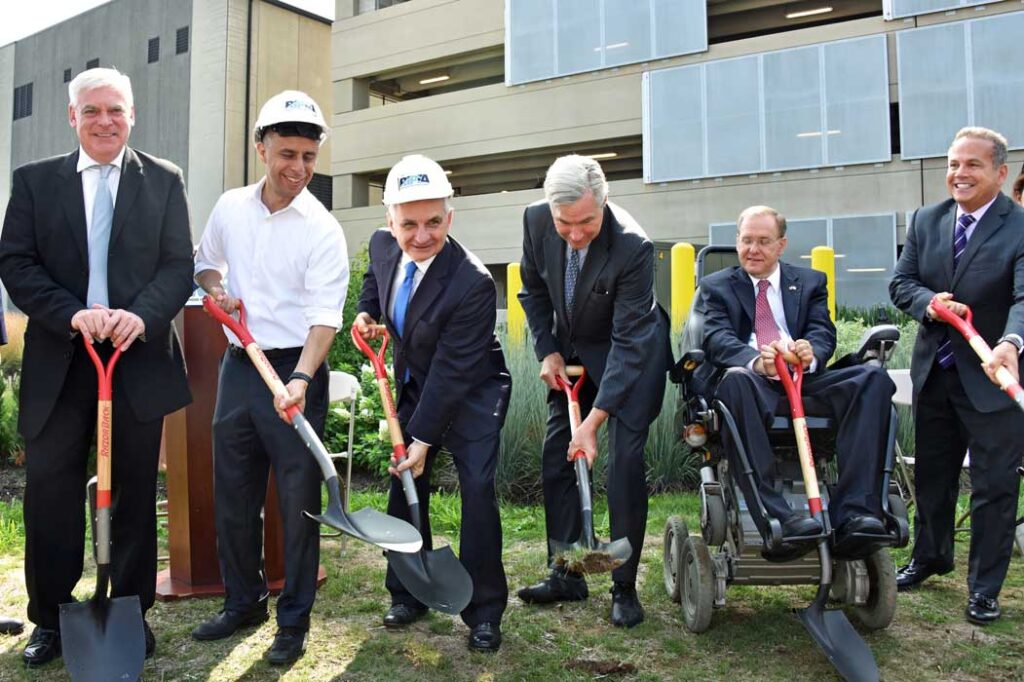
DTC Groundbreaking – August 24, 2018
RIPTA CEO Scott Avedisian welcomed the entire RI Congressional delegation and Providence Mayor Elorza to mark the official start of construction on the Downtown Transit Connector (DTC). Avedisian noted the DTC will “create a spine across the City of Providence to move people effectively and efficiently.” The project is largely being funded by a federal USDOT TIGER grant, with construction continuing through 2019.
The RIPTA Downtown Transit Connector (DTC) is an enhanced bus corridor that provides our riders with improved service frequency, reliability, and design features. The project includes substantial and attractive transit stops for passengers, and features that give priority to transit vehicles, enhance local placemaking, and improve pedestrian accessibility. The following is a description of key design features.
Shelter Design & Passenger Amenities +
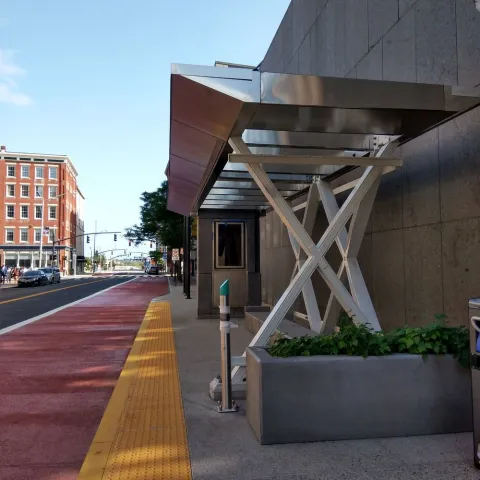
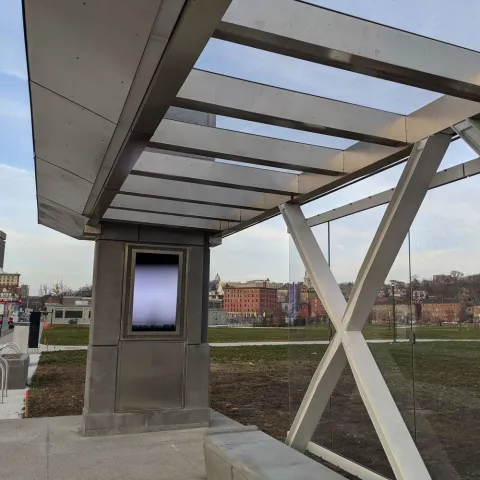
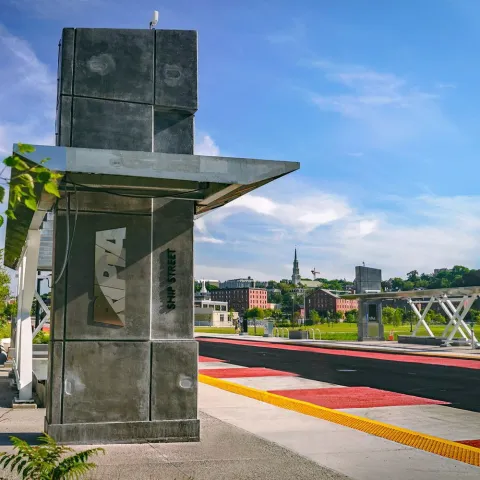
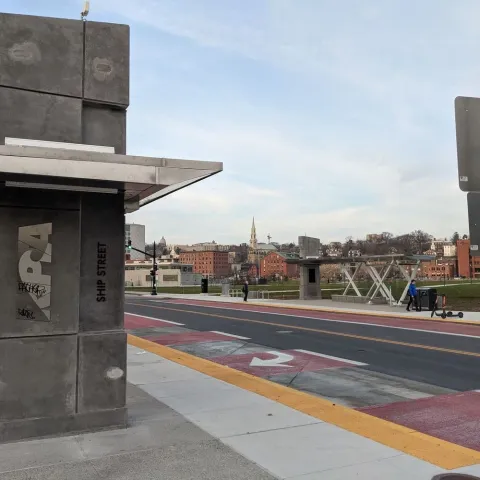
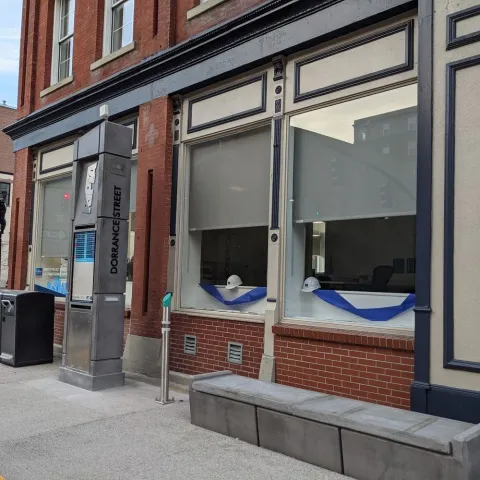
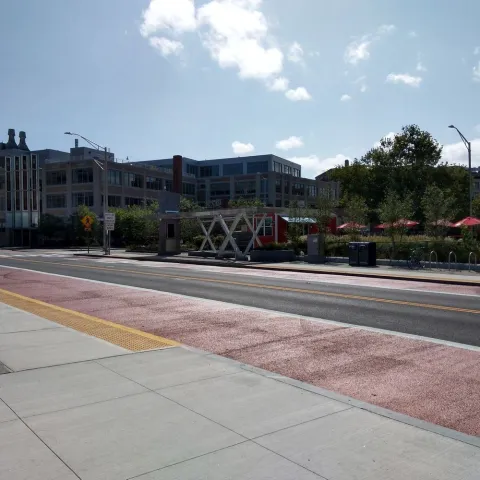
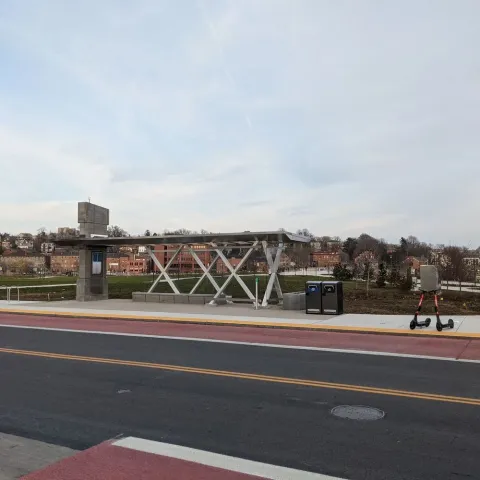
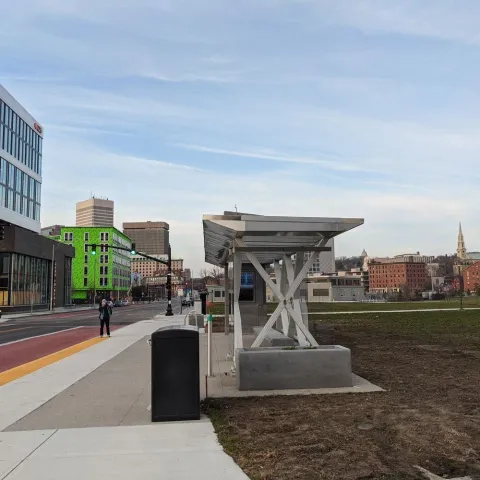
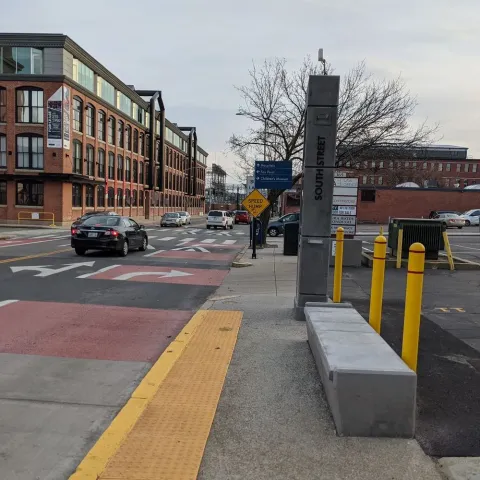
DTC stops include high-quality shelters with seating, real-time bus information, lighting, and digital schedule and wayfinding information. Each stop has been designed with placemaking in mind, using special pavement treatments, attractive materials, and other features to help integrate with the surrounding neighborhood. All DTC stops are fully accessible and include features to improve the pedestrian experience, such as curb extensions or “bulb-outs” for bus boarding, safe and convenient crosswalks, and pavement markings and patterns to delineate bus stops.
Roadway Design +
Streets in the corridor have been modified to better accommodate high-frequency bus service, while maintaining traffic flow and safety for all modes. The DTC corridor incorporates proven measures for improving the speed and reliability of transit, providing safe and convenient pedestrian access, and minimizing conflicts between DTC buses and pedestrians, especially at intersections and stations. Design features include the extension of green traffic signals for buses (and emergency vehicles) along the corridor, special signal phases allowing buses to “jump” the traffic queue and move ahead of regular traffic, and dedicated bus lanes. In some areas, on-street parking spaces have been eliminated.
Bicycling Infrastructure +
Bike lanes and signals were added to Exchange Street (north of Exchange Terrace).
Frequent and Reliable Bus Service +
RIPTA operates 6 existing routes along the DTC corridor, meaning a bus will arrive every 5 minutes (or better) on weekdays going both north to Providence Station and south to RI Hospital. Routes operating in the corridor include:
3 Oakland Beach
4 Warwick Avenue
51 Charles St/Twin River/CCRI
54 Lincoln/Woonsocket
58 Mineral Spring/N. Providence
72 Weeden St/Central Falls
Routes 1 and 92 also serve parts of the corridor.
Bus trips to the Hospital and Jewelry Districts were more than doubled by RIPTA in preparation for DTC service, with bus transfers at Kennedy Plaza eliminated for many workers in these areas. Six colleges and universities can also utilize DTC service for direct connections to Providence’s innovation and medical districts: URI, Bryant, PC, RIC and CCRI campuses in Lincoln and Providence.
Frequent and Reliable Bus Service +
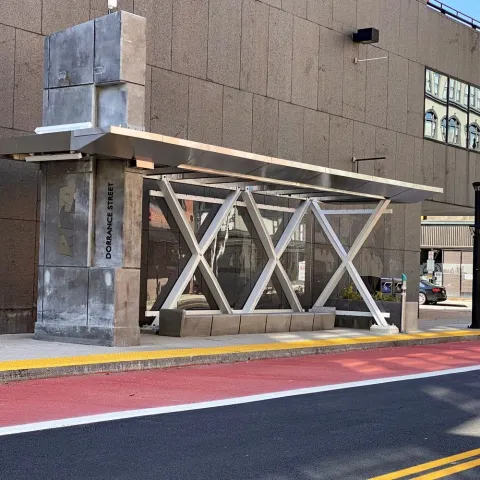
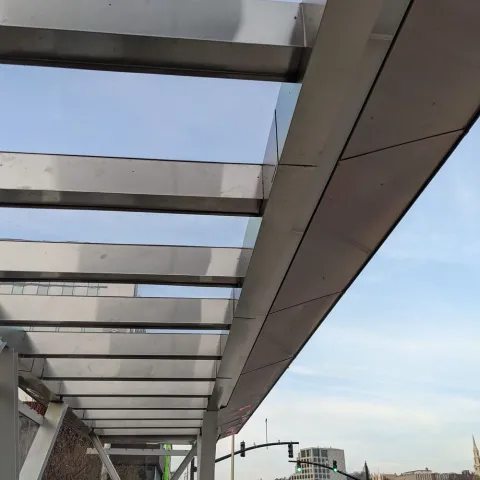
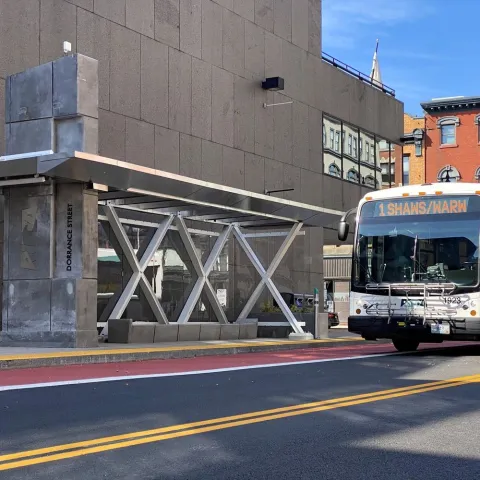
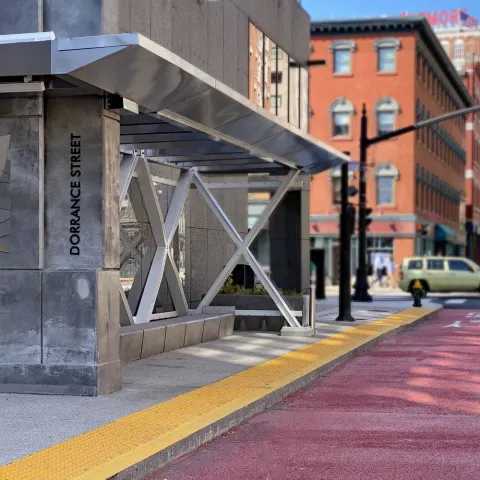
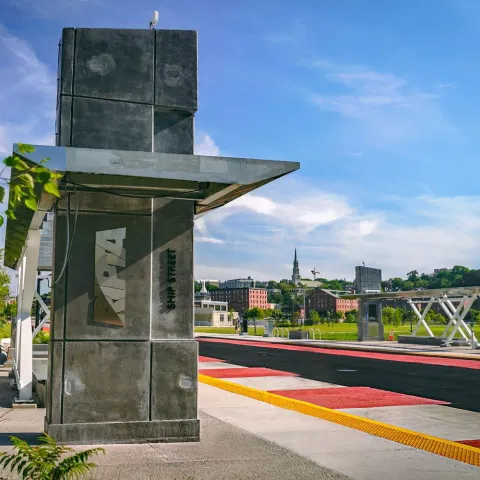
RIPTA created a unique design for shelters at DTC stops, introducing a recognizable “look” and identity for the DTC. DTC shelters include canopies and seating, attractive materials, a consistent color theme, and distinctive signage and lighting. Digital information kiosks provide real time bus arrival information and other updates.
Six stops are located along the DTC route. These are not typical bus stops; instead, they provide passengers with high-quality shelters and passenger amenities. These stops are the only locations where DTC buses will stop between Providence Station and the Hospital District. These stops are:
Providence Train Station +
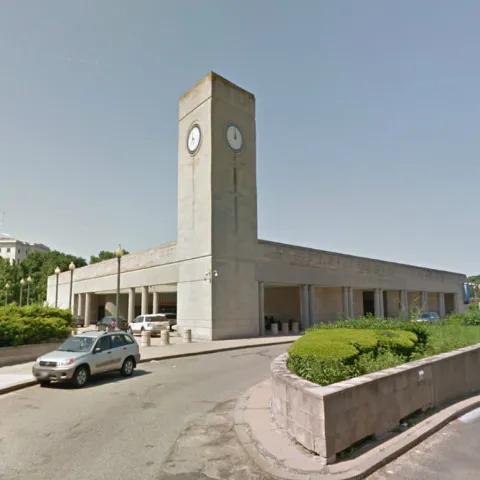
The northern terminus of the DTC corridor is the Providence MBTA/Amtrak Station. This stop serves the rail station, state offices, Providence Place Mall and surrounding office and residential buildings. DTC riders will be able to make direct connections with commuter rail and Amtrak services, as well as numerous other RIPTA bus routes. RIPTA’s Routes 3, 4 and 62 will terminate at this location, while the other DTC Routes – 51, 54, 58 and 72 – will continue north of the station.
Kennedy Plaza +
Kennedy Plaza is a central public space; along with adjacent Burnside Park, Kennedy Plaza is the heart of downtown Providence’s public realm. It is also a busy transit center in downtown Providence, where many RIPTA routes intersect and passengers transfer between routes. The DTC stop in this location will allow for connections to other RIPTA routes, and will serve City Hall, the Federal Courthouse, the Post Office, and nearby hotels, restaurants, offices and the convention center.
Dorrance Street +
Paired stops on Dorrance Street are located on the corners of Weybosset Street (southbound) and Pine Street (northbound). The Downcity area is a vibrant mixed-use neighborhood with a high density of employment, entertainment and dining options, as well as a growing residential population. These stops will also serve Johnson & Wales University’s downtown campus and Garrahy Courthouse.
Ship Street +
This stop is located on Dyer Street just north of Ship Street, near Waterfront Park, the Providence River Pedestrian Bridge, the Cambridge Innovation Center at 225 Dyer Street and Brown Medical School. It will intersect with City Walk, a walking and bike corridor that will link Providence neighborhoods with various parks and open spaces. The stop will provide excellent transit service to a fast-developing neighborhood and offer key bike and pedestrian connections at City Walk.
South Street +
This stop is located on Eddy Street by South Street Landing and the RI Nursing Education Center. It serves Davol Square, the River House apartments behind Davol Square, the Providence Children’s Museum and a growing concentration of residents and businesses in the Jewelry District.
Future Stop +
There is the potential to add a future stop on Eddy Street near its intersection with Allens Avenue and Richmond Street. RIPTA would work with the City of Providence to construct DTC shelters in this location once more development occurs in this area.
Hospital District +
The southern terminus of the DTC is located at Rhode Island Hospital. This stop serves the large and growing concentration of healthcare facilities, medical offices, and biotech businesses in the area. The DTC’s frequent and reliable service to Providence Train Station and Kennedy Plaza are a major benefit for employee and patient access, and helps to mitigate growing congestion and parking issues. The Hospital District DTC stop will be accessible from the Allens Avenue waterfront via Blackstone Street. DTC Routes 3 and 4 continue south of the DTC terminus; all other DTC routes will terminate here.
The project schedule, milestones, key activities, and civic engagement are listed below. The service began operating in early 2020, and construction on all project elements is now complete.
Advance the design of stations, street cross-sections, amenities and a terminal in the RI Hospital area. Work with local stakeholder to further develop the design concepts.
June 2017
Open House for Businesses/Property Owners
Fall 2017
Final Engineering
Complete engineering for all design elements and create construction specifications.
October 2017
Stakeholder Meeting
February 2018
Stakeholder Meeting
March 2018
Public Meeting
Winter 2018
Property Owner/Business Outreach
Mid 2018
Construction Begins
Construct stations and street improvements. Note: the Providence Station Transit Center will be constructed as part of a separate RIDOT project.
The Metro Connector Study is exploring options for fast, frequent, and reliable transit service that connects regional activity centers, neighborhoods, business districts, and transportation hubs along two corridors in metropolitan Providence. More specifically, this study focuses on connecting higher-density areas in Central Falls, Pawtucket, Providence, Cranston, and Warwick.
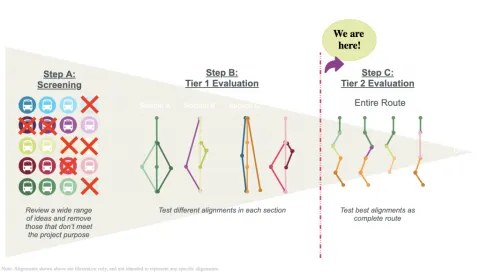
We are currently more than halfway through our evaluation. We started with a potential universe of many ideas, developed a long list of concepts, and now we have identified a short list of four potential corridor alignments, or “alternatives,” that we want to study further. The four alternatives focus on two general corridors and include considerations for both light rail transit (LRT) and bus rapid transit (BRT).
Click here to view the interactive StoryMap that will tell you more about the evaluation process to date, and the four shortlisted alternatives.
What Comes Next?
Over the past month, our team of engineers has been evaluating how a new high-quality transit investment might be integrated into the existing streets of Central Falls, Pawtucket, Providence, Cranston, and Warwick. We looked at where stations would be, where in the roadway could transit vehicles operate, and how fast could transit reasonably and safely go considering other uses of the roads. All these assumptions will inform the Tier 2 evaluation, which is also happening this summer. This evaluation will compare the benefits and impacts of each alternative with one another, aligned with the overarching goals of the project and documenting anticipated ridership and costs to build and operate.
Later this summer, we will host a series of focus groups with stakeholders from across the potential Metro Connector communities to talk about the alternatives and potential benefits and impacts of each.
Our next milestone for community engagement will be this fall, following the Tier 2 evaluation. We’ll share the findings from our technical work with the public and seek input on how well each of the alternatives meet project goals and serve the communities in the project area. Feedback from the community will inform the last step of the project: identifying the mode and alignment that will move forward into the recommendations stage.
Stay tuned for updates including community pop-up events, surveys, and public meetings!
If you have further questions about Metro Connector, please email Project Manager Zachary Agush at MetroConnector@RIPTA.com, or call RIPTA at 401-784-9500 x1205.
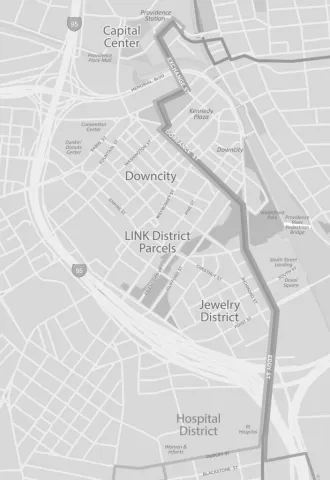
The Downtown Transit Connector provides high-frequency transit service (every 5 minutes in each direction) between the Providence Amtrak/MBTA Station and the Hospital District in Upper South Providence. There are six paired stops along the corridor, each designed with a unique and highly-visible identity. The stops feature shelters, real-time bus arrival signage, and other passenger amenities. RIPTA service in this corridor has been enhanced using signal priority for buses and dedicated bus lanes, as well as attractive public spaces around DTC stops.
The $17 million project is funded by RIPTA and a USDOT Transportation Investments Generating Economic Recovery (TIGER) grant awarded to the City of Providence in 2014. Part of the funding was used by RIPTA to purchase vehicles to operate the service.
SERVING DOWNTOWN PROVIDENCE, RHODE ISLAND
frequent bus service and better passenger amenities
NEWS & EVENTS +
Construction activity began in August 2018 and will be complete in 2020. Station infrastructure in Kennedy Plaza and at Providence Station will be added at later dates, as part of future projects planned in these areas.
RIPTA CEO Scott Avedisian welcomed the entire RI Congressional delegation and Providence Mayor Elorza to mark the official start of construction on the Downtown Transit Connector (DTC). Avedisian noted the DTC will "create a spine across the City of Providence to move people effectively and efficiently." The project is largely being funded by a federal USDOT TIGER grant, with construction continuing through 2019.
The DTC serves six stops in four downtown Providence neighborhoods: the Hospital District, the Jewelry District, Downcity and Capital Center. Service will be operated by regular RIPTA routes run along the corridor via Eddy Street, Dorrance Street, Kennedy Plaza and Exchange Street. Routes 51, 54, 55, 58 and 72 were extended south beyond Kennedy Plaza to RI Hospital, and Routes 3 and 4 were also extended north to Providence Station. Weekday frequencies have also been increased to ensure a combined 5 minute service frequency along the DTC corridor.
DTC stops are located at: 1) RI Hospital; 2) Eddy Street at South Street Landing; 3) Dyer Street at Ship Street; 4) Dorrance Street at Weybosett/Pine; 5) Kennedy Plaza; and 6) Providence Station. Service in the corridor only stops at these stations. Designated bus and bike lanes have been added along certain segments and green lights will be extended for oncoming buses to help the speed and reliability of transit.
In 2022, RIPTA studied ADA/Paratransit service to understand what it might look like to expand current paratransit-type service to other areas of the state. About RIde/ADA Paratransit Just as the fixed-route system connects people to jobs, family, education, shopping, recreation, and more, RIPTA’s RIde paratransit service provides those connections for riders whose disabilities prevent them
The Rhode Island Public Transportation Authority (RIPTA) statewide Transit Master Plan identified Mobility on Demand (MOD) as a potential mobility solution for the state. MOD is the ability to leverage technologies, including real-time data, trip planning, and mobility wallet, to better apprise users of mode choices and improve their transportation experience.
In keeping with federal requirements, RIPTA makes available to the public a “program of projects” detailing federal funding amounts available and how these funds are to be invested in transit projects. This “program of projects” is published as part of the State of Rhode Island’s Transportation Improvement Program (TIP).